China Top 10 Auto Car Wash Machine Manufacturers in 2026?

Choosing an Auto Car Wash Machine manufacturer in China for 2026 takes more than comparing prices or brochure photos. Buyers need to examine the equipment behind the claims: wash capacity, drying performance, water use, control systems, and maintenance access. A bright showroom can impress. Daily operation tells a different story.

This guide introduces ten Chinese manufacturers for buyers researching automatic car wash equipment. It offers a starting point, not a final verdict. Company capabilities, product ranges, export experience, and service coverage can change, so current details should be confirmed directly with each supplier. Ask for machine specifications, installation requirements, warranty terms, spare-parts availability, and references from comparable sites. If possible, inspect a working installation. Watch a full wash cycle, not just a demonstration clip.

Details matter. Consider whether a site handles sedans, SUVs, or mixed vehicle sizes. Check the available floor space, drainage, water supply, and electrical requirements before comparing quotations. Ask how routine cleaning and component replacement are performed. A lower initial price may not mean lower ownership costs, but the opposite is not guaranteed either. That deserves a closer look.

No single manufacturer will suit every car wash business. Local support, operating conditions, budget, and expected vehicle volume all shape the decision. This list can help narrow the field, while careful due diligence helps test each company’s claims. Treat rankings as a guide, not proof of performance.
China Top 10 Auto Car Wash Machine Manufacturers in 2026?

What Defines an Auto Car Wash Machine Manufacturer in China?

What Defines an Auto Car Wash Machine Manufacturer in China?

A Chinese auto car wash machine manufacturer is more than a factory assembling frames, pumps, and brushes. It should control or document key processes, from mechanical design and electrical integration to final water-flow and safety checks. Ask for engineering drawings, component specifications, test records, and clear warranty terms. These details help buyers distinguish a production partner from a trading intermediary. Small differences matter: a misaligned brush or inconsistent dryer airflow can affect daily operation.

Market demand makes reliable evaluation important. Grand View Research estimated the global car wash services market at USD 34.04 billion in 2023 and forecast growth through 2030. This is a services-market estimate, not a machine-sales figure, but it signals the scale of the sector manufacturers serve. A credible supplier should explain rated vehicle throughput, water and power use, installation needs, and maintenance intervals using measurable data. Ask how those figures were tested. A brochure alone is not proof.

Tips: Request a factory audit or a live demonstration using a vehicle similar to yours. Check spare-part availability, response times, and manuals before ordering. Look closely at wet-floor drainage and the control cabinet. And leave room for doubt: published capacity may not match real-world traffic, especially during peak hours.

How the Top 10 Manufacturers Are Selected for 2026

Selecting China’s top auto car wash machine manufacturers for 2026 requires more than comparing product photos or advertised prices. A credible assessment should examine engineering, service, and operating evidence. We would review equipment specifications, cleaning-cycle consistency, water and detergent controls, and compatibility with different vehicle sizes. Practical details matter: Can staff reach the service panel easily? Does the dryer leave water around mirrors? Small failures become costly when a wash site is busy.

Evidence should carry more weight than claims. We would compare documented installation records, warranty terms, spare-parts availability, and response times for technical support. Factory audits and customer references can help verify whether stated production capacity matches actual delivery. We would also assess how clearly manufacturers explain maintenance needs and operating costs. Not every supplier publishes comparable data. That makes a precise ranking difficult, and our selection may reflect gaps in the available evidence. Buyers should confirm performance through a site visit, a live demonstration, and written service commitments. Real operating conditions matter. A machine that performs well in a showroom may behave differently after months of daily use.

China Top 10 Auto Car Wash Machine Manufacturers in 2026? - How the Top 10 Manufacturers Are Selected for 2026

A transparent, evidence-based framework for comparing manufacturers of automatic vehicle-wash equipment. The criteria below describe how candidates can be assessed; they do not represent a verified ranking of specific companies.

Selection Dimension Weight What Is Evaluated Evidence to Request or Verify
Manufacturing capability 18% Ability to design, assemble, test, and support complete automatic wash systems at a consistent production standard. Factory audit, production records, quality-control procedures, equipment test reports, and product documentation.
Product range and application fit 14% Availability of relevant configurations, such as rollover, tunnel, or other automatic wash systems, and suitability for the buyer’s site and throughput needs. Current product specifications, installation requirements, site plans, and documented operating parameters.
Reliability and serviceability 14% Design for routine operation, maintainability, spare-parts availability, and access to technical support. Warranty terms, maintenance schedules, parts lists, service response commitments, and references that can be independently checked.
Safety and compliance documentation 12% Appropriate electrical, mechanical, and operational safeguards, with documentation relevant to the destination market. Risk assessments, operating manuals, conformity documents, inspection records, and certificates verified with the issuing body where applicable.
Water and energy efficiency 10% Measured resource use and the availability of water-recovery or other efficiency options for the proposed system. Test conditions and consumption data per wash cycle, recovery-system specifications, and clear disclosures of measurement assumptions.
Installation and commissioning support 9% Clarity of installation requirements and the availability of commissioning, training, and technical guidance. Installation manuals, utility and foundation requirements, commissioning plans, training materials, and support coverage by region.
Export and project experience 8% Demonstrated ability to manage overseas shipments and adapt project documentation to customer and destination-market requirements. Redacted project records, shipping documentation, market-specific manuals, and verifiable customer references.
Customization and system integration 6% Capacity to accommodate site constraints and integrate options such as payment systems, controls, and water-treatment equipment. Engineering drawings, interface specifications, change-control procedures, and examples of completed integrations.
Commercial transparency 5% Clarity of quotations, scope, exclusions, lead times, warranty coverage, and payment terms. Itemized quotations, contract terms, delivery schedules, warranty documents, and a written list of included and optional components.
Independent customer validation 4% Strength and relevance of customer feedback, with greater confidence assigned to independently verifiable operating references. Reference calls, site visits where feasible, service records, and evidence that installations are operating as described.
Total evaluation weight 100% Use the same evidence standards and scoring scale for every candidate.

How to interpret this table: These weights are a proposed comparison framework, not measured industry statistics. A credible 2026 “Top 10” list should name its candidates, disclose its scoring method, and substantiate claims with current, independently checkable evidence. No manufacturer ranking or company-specific performance data is asserted here.

China’s Top 10 Auto Car Wash Machine Manufacturers in 2026

China’s Top 10 Auto Car Wash Machine Manufacturers in 2026

China’s car-wash equipment market serves a large and changing vehicle base. The China Association of Automobile Manufacturers reported 31.28 million vehicles produced and 31.44 million sold in 2024. These figures describe the wider automotive market, not car-wash machine sales. Still, they help explain why manufacturers compete on throughput, water use, and service access. Buyers should compare machine capacity with actual peak-hour traffic, not just headline speed. A busy site needs reliable sensors, clear safety controls, and parts that technicians can replace without lengthy delays. Small details matter.

Electrification also affects equipment planning. The International Energy Agency’s Global EV Outlook 2025 reports that electric car sales in China reached around 11 million in 2024, close to half of new car sales. For equipment makers, this raises practical questions about vehicle clearance, sensor calibration, and wash programs for varied body designs. In assessing China’s leading manufacturers in 2026, compare verified installation records, water-recycling performance, control-system stability, and after-sales response times. Ask for measured operating data from comparable sites. Brochures can look convincing. They are not field tests. Published market rankings may use different criteria, so buyers should check how each list defines “top” before relying on its order.

Key Technologies and Product Types Offered by These Manufacturers

China Top 10 Auto Car Wash Machine Manufacturers in 2026?

Key Technologies and Product Types Offered by These Manufacturers

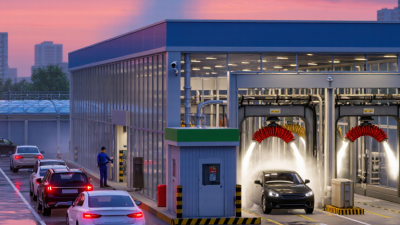
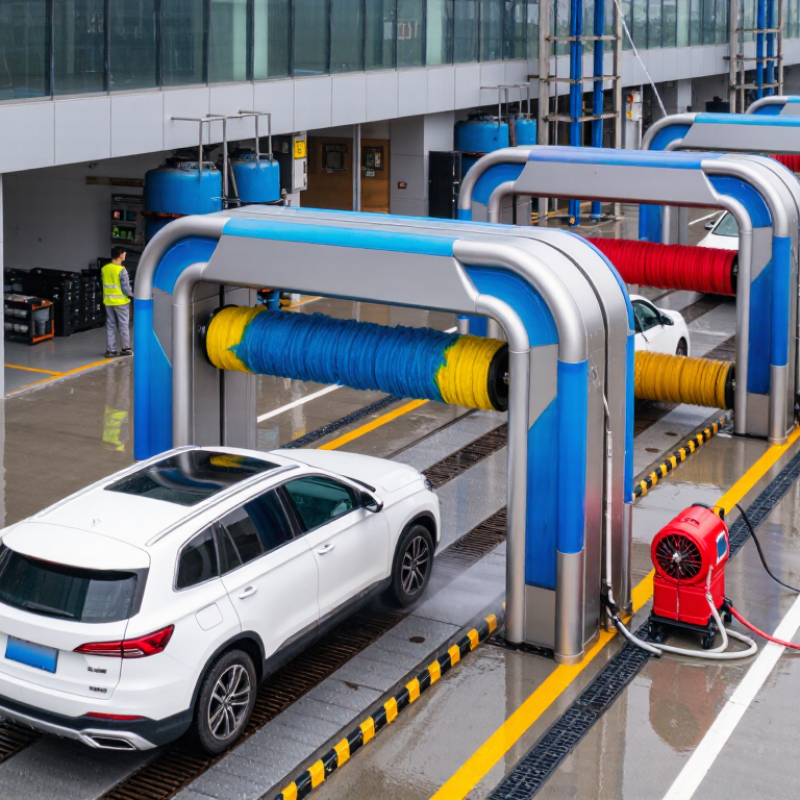
Chinese car wash equipment manufacturers offer several system types, from compact rollover machines to high-throughput conveyor lines. Rollover units move washing arches around a stationary vehicle, making them practical for sites with limited space. Conveyor systems carry cars through staged brushes, spray arches, and drying zones. Touchless models use high-pressure water and detergent instead of direct brush contact. The right choice depends on daily vehicle volume, site layout, water supply, and the level of cleaning customers expect.

Common technologies include variable-frequency drives, vehicle-size sensors, programmable wash cycles, and water-recycling systems. Sensors help adjust equipment movement around different car shapes, while controlled dosing can reduce detergent waste. Recycling units filter and reuse part of the wash water, though performance depends on maintenance and local water quality. Some machines also offer foam application, underbody rinsing, and automatic payment controls. Features can sound impressive. Check cycle time, service access, and replacement-part availability before comparing specifications; these details affect real operating costs.

Tips: Ask suppliers for cycle demonstrations using vehicles with different heights and body shapes. Inspect safety sensors, emergency stops, and filter-cleaning access. Request clear guidance on installation, routine maintenance, and water consumption. Small checks matter. A polished brochure is not enough. Keep in mind that published performance figures may come from controlled tests, so verify them against your site conditions before choosing a system.

How to Compare Manufacturers for Different Car Wash Needs

Comparing Chinese car wash machine manufacturers starts with the job, not the brochure. A compact workshop may need a reliable rollover unit, while a busy fuel station may require higher throughput and fast service access. Grand View Research estimated the global car wash services market at USD 31.5 billion in 2023, with projected growth of 5.5% annually from 2024 to 2030. That growth signals demand, but it does not prove that every site needs the largest machine. Match rated cycles per hour to observed peak arrivals, then check whether the figure assumes ideal conditions. Real queues are messier.

Ask manufacturers for water and power consumption per wash, installation drawings, cycle-time definitions, and a parts list. The U.S. EPA’s WaterSense guidance on commercial car washes highlights water reuse as a practical efficiency measure; compare reclaim-system capacity and maintenance needs, not just advertised savings. A shiny demo is not enough. Request references from installations with similar climate, vehicle mix, and daily volume, and ask how quickly common replacement parts can be supplied. Warranty terms matter, but so does technician response time. I would also verify local electrical compatibility and drainage requirements with qualified site contractors. Specs can look complete, yet commissioning details are sometimes thin. That deserves a second look.

China Top 10 Auto Car Wash Machine Manufacturers in 2026? — Comparing Wash Systems by Customer Need

Typical wash-time ranges vary by vehicle size, options, and site setup. Use them as a planning guide when comparing equipment; they are not manufacturer-specific performance claims.

Touchless and in-bay automatic systems can suit sites with limited space, while conveyor tunnels are designed for higher vehicle throughput. Self-service bays give customers more control but typically take longer per vehicle.