What Are the Top Auto Car Wash Machine Types in 2026?
In 2026, choosing the right Auto Car Wash Machine requires more than comparing purchase prices. Operators must examine wash quality, vehicle capacity, labor needs, water management, and long-term maintenance. A compact in-bay automatic system may suit a fuel station with limited space. A tunnel system can handle heavier traffic, especially near busy urban roads. Touchless equipment protects against brush contact, while friction systems often deliver stronger cleaning on road film and dried mud.
This guide explores the leading machine types expected to shape the car wash market in 2026. It considers rollover systems, tunnel conveyors, touchless machines, friction equipment, and hybrid designs. Each section connects technical features with practical operating conditions. Pump pressure, dryer performance, chemical control, sensor accuracy, and reclaim systems can affect both results and customer trust. A machine that looks impressive during a demonstration may perform differently during a rainy weekend. Real maintenance records matter.
No single system wins every site. That is the honest part. Experienced operators usually compare several weeks of performance, not one showroom test. They watch queue length, cleaning consistency, downtime, and customer complaints. They also check whether local technicians can obtain replacement parts quickly. Some 2026 technologies may still need more field evidence. Marketing language can move faster than proven reliability. Therefore, this overview combines industry knowledge, practical observations, and measurable selection criteria, helping buyers make a careful decision without treating automation as a perfect solution.
How Auto Car Wash Machines Work and How They Are Classified
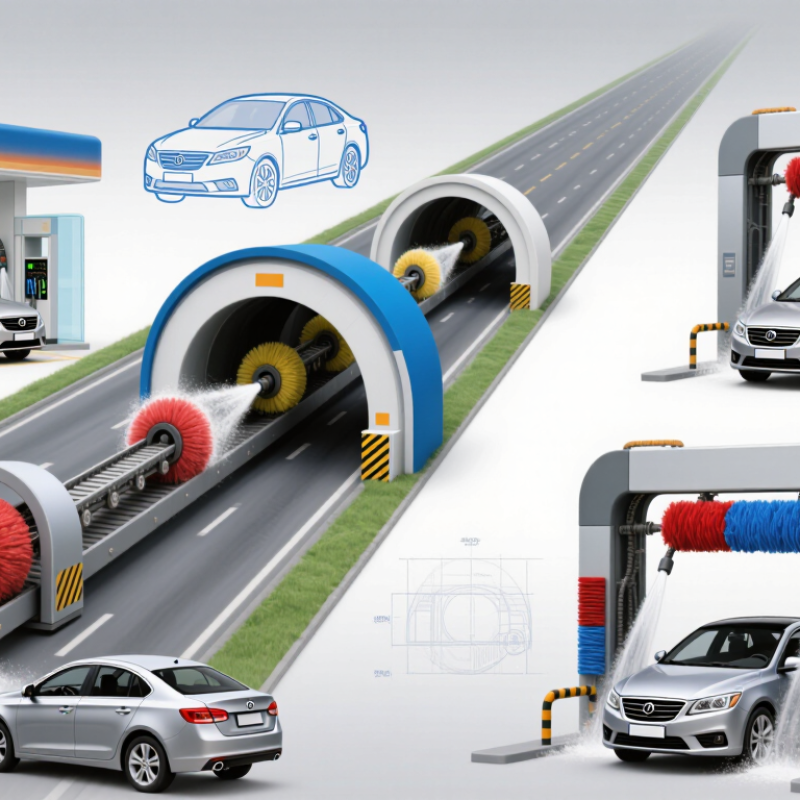
Auto car wash machines combine water delivery, chemical dosing, mechanical movement, sensors, and drying. Their classification depends on vehicle movement, cleaning contact, and automation level. In a tunnel system, a conveyor pulls the vehicle through fixed arches. Brushes, curtains, spray bars, and dryers operate in timed zones. The machine controls speed and water pressure. A rollover system keeps the car stationary while a gantry moves around it. This layout suits smaller sites and simpler traffic flow. Both systems need calibrated sensors and regular inspection.
Touchless machines use high-pressure water, detergent, and targeted rinsing instead of brushes. They reduce contact marks, but stubborn road film may remain. Friction systems use soft cloth or foam components. They usually remove heavy dirt more effectively, yet poorly maintained materials can carry grit. Self-service bays classify differently because customers control each stage with a wand, brush, and timer. In 2026, intelligent systems may adjust cycles using vehicle shape, dirt readings, and water-recovery data. That sounds impressive. Real results still depend on maintenance, operator training, and local water conditions. A perfect wash is not guaranteed.
Tips: Watch the vehicle path during a full cycle. Listen for unusual pump noise. Check spray nozzles for uneven patterns. Ask how often brushes, filters, and emergency stops are inspected. Choose touchless cleaning for delicate exterior parts, but do not expect it to remove every stain. Keep records. They reveal recurring faults faster than memory.
What Are the Top Auto Car Wash Machine Types in 2026? — How Auto Car Wash Machines Work and How They Are Classified
| Machine Type | How It Is Classified | How It Works | Typical Throughput | Key Advantages | Considerations |
|---|---|---|---|---|---|
| In-Bay Automatic — Friction | Stationary vehicle; moving gantry or rollover equipment; uses brushes, cloth, or other contact media. | The vehicle remains in a wash bay while equipment moves around it. The system applies water and detergent, makes contact to loosen and remove soil, then rinses and may apply drying equipment. | One vehicle is washed per bay cycle. Capacity depends on cycle length, vehicle positioning, and site operations. | Compact layout; familiar wash process; can clean surface dirt through direct contact. | Contact media require regular inspection and maintenance. Vehicle dimensions and condition may affect the wash process. |
| In-Bay Automatic — Touchless | Stationary vehicle; moving gantry; cleaning relies primarily on chemical application and high-pressure water rather than brushes or cloth. | A gantry travels around the vehicle, applying presoak or detergent and directing high-pressure water at the exterior. Rinsing and optional drying follow. | One vehicle is washed per bay cycle; actual capacity varies with program length and equipment setup. | No wash brushes or cloth contact the vehicle during cleaning. | Cleaning results depend on soil level, chemistry, water pressure, and spray coverage; heavily adhered dirt may be more difficult to remove. |
| Conveyor Tunnel — Friction | Vehicle moves through a fixed wash line on a conveyor; uses brushes, cloth, or other contact equipment. | A conveyor advances vehicles through sequential stages, which can include presoak, friction washing, rinsing, protective treatments, and drying. | Designed for continuous vehicle flow. Capacity varies with tunnel length, conveyor speed, spacing, and operating procedures. | Suitable for higher-volume sites; multiple wash stages can operate in sequence. | Requires more space and coordinated vehicle loading than a typical in-bay system. Contact equipment and conveyor components need routine maintenance. |
| Conveyor Tunnel — Touchless | Vehicle moves through a conveyor tunnel; cleaning uses chemical application and high-pressure water with no brush or cloth contact. | Vehicles pass through a sequence of spray arches or stationary nozzles that apply cleaning solutions and high-pressure rinses, followed by optional drying. | Continuous-flow design; practical capacity depends on tunnel layout, vehicle spacing, and wash-program duration. | Combines conveyor-based vehicle flow with a no-contact cleaning approach. | Requires careful control of spray coverage and wash chemistry. Results can vary with the type and amount of soil on a vehicle. |
| Hybrid Automatic System | Classified by its combination of cleaning methods; may use either an in-bay or conveyor layout. | Combines high-pressure water and chemical cleaning with selected friction stages. The sequence varies by system and wash program. | Depends on whether the installation is in-bay or conveyor-based and on the selected wash cycle. | Can combine non-contact presoak or rinsing with targeted friction cleaning. | “Hybrid” describes the cleaning approach, not one standard machine layout. Equipment configuration and maintenance needs vary. |
Classification note: Automatic car washes are commonly classified on two separate axes: vehicle movement (in-bay or conveyor) and cleaning method (friction, touchless, or hybrid). Throughput is site- and cycle-dependent, so the descriptions above are comparative rather than guaranteed performance figures.
Related Posts
-
2026 Top Electric Car Wash Machine Types for Global Buyers
-
China Best Commercial Car Wash Machine Suppliers?
-
China Top Commercial Car Wash Machine Suppliers?
-
Why an Automatic Carwash Machine is the Future of Convenient Vehicle Care
-
China Best Commercial Car Wash Machine Manufacturer?
-
How to Choose the Best Electric Car Wash Machine for Your Needs